
Reading for Your Third Act
This is a curated and growing collection of books on topics that matter to executives entering their Third Act — purpose, longevity, reinvention, legacy, health, and the art of living well in the chapters ahead. Each one was chosen because it has something real to say.
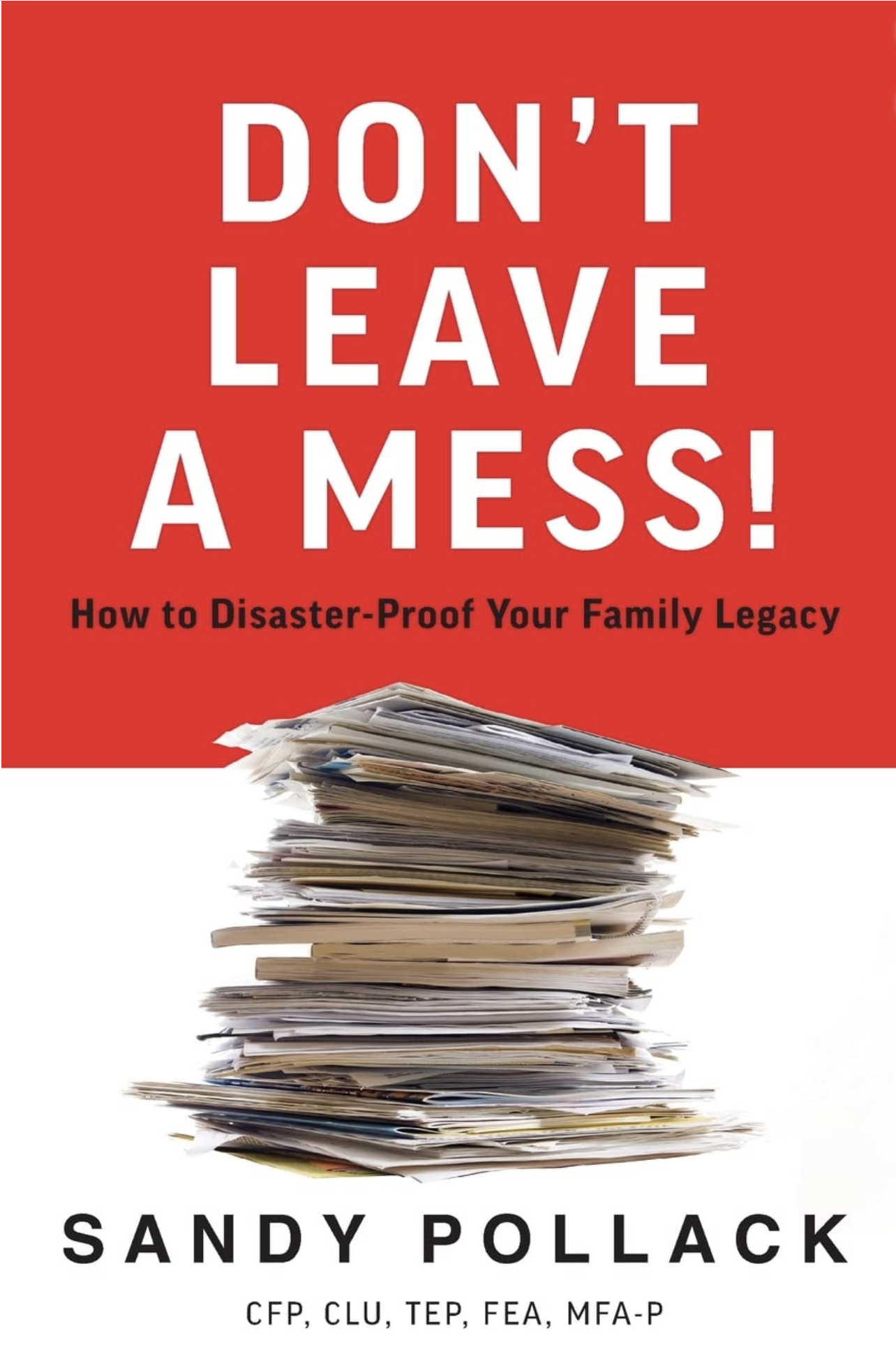
Don’t Leave a Mess!
Building wealth, managing wealth, and transitioning wealth are not the same thing.
You’ve built your business, dedicated vast amounts of time and money to it, and now you’re ready to consider your legacy. What are you passing on, and how does it reflect your values? Is your family prepared for the legacy they will receive, or are you leaving them a mess?
In Don’t Leave a Mess!, estate planner and family business advisor Sandy Pollack unpacks what it means to make wise choices for your business that not only protect what you have worked so hard to build but reflect your why. With more than twenty years in the industry, Sandy helps family business owners unravel the complexities that running a successful business and building significant wealth can create.
Join Sandy in a thoughtful exploration of your own history and values so you can set the right priorities, choose the right team of professional advisors, simplify your legacy, and communicate with your family so that no mess is left behind.
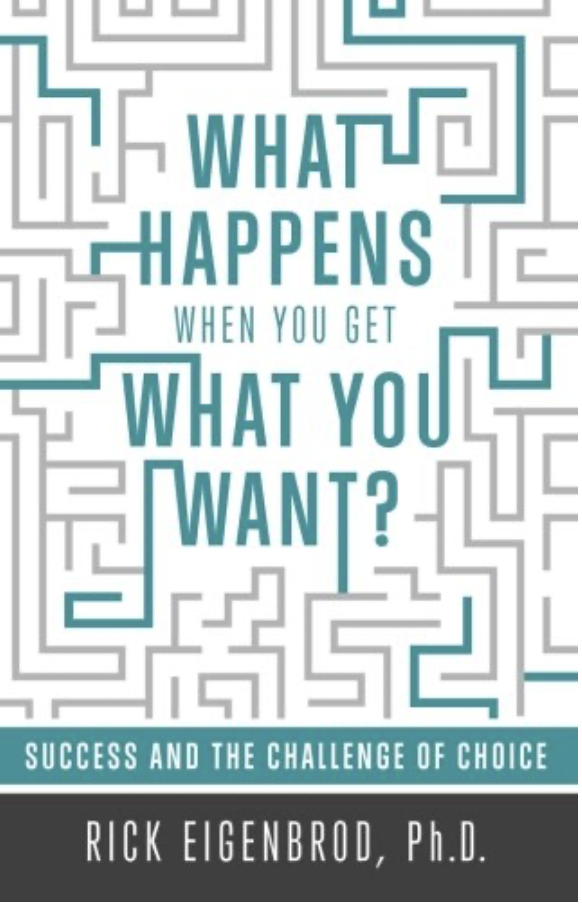
What Happens When You Get What You Want?
In this provocative book, Dr. Rick Eigenbrod invites readers to consider the idea that we are far better prepared to pursue success than to have it. With humor and insight, he explores the reality of what happens when we get what we want and why success, along with gain, acquisition, and achievement, can also bring loss and disruption to our lives. In addition to a greater understanding of the profound emotional, psychological, and social impact that “success” has on our lives, Rick provides an alternative to the Grand Narrative of $uccess as life’s supreme organizing principle. In this wonderfully concise work, Rick offers a framework for choice-making, that gives us a reliable and enduring source of structure, meaning, and identity as we navigate the uncharted waters of ‘What next?’ and ‘Is this all there is?.’
The central thesis is surprisingly simple:
We spend much of our lives learning how to achieve success, but almost no time learning how to live after we’ve achieved it.
Rick Eigenbrod, a clinical psychologist who has worked extensively with entrepreneurs and CEOs, argues that the greatest challenge isn’t getting what you want—it’s deciding who you become once you have it.
The key ideas
1. Success changes you more than you expect
Most people assume that when they reach a major goal—selling a company, becoming financially independent, retiring, reaching the C-suite—their circumstances will change but they’ll remain essentially the same person.
Eigenbrod argues the opposite.
Success often disrupts your: identity, routines, relationships, motivation, sense of purpose
The very thing you’ve worked toward can remove the structure that has organized your life for decades.
2. Achievement creates an unexpected vacuum
People often imagine success as permanent satisfaction.
Instead, many successful people experience questions like:
“Now what?”, “Is this all there is?”, “Who am I if I’m no longer building?”, “What should I do with the rest of my life?”
The achievement itself isn’t the problem. The absence of the next compelling narrative is.
3. Society tells us one story—the “Grand Narrative of Success”
Eigenbrod says we’re taught that life follows a script:
Work hard → , Achieve →, Acquire →, Win →, Repeat
That narrative works extremely well until you’ve actually won. Then it stops providing direction.
4. Choice becomes the new challenge
After success, the problem is no longer scarcity. It’s abundance.
When you have: enough money, enough freedom, enough credibility, enough options
you face something much harder:
How do you choose?
The book argues that freedom without an organizing purpose often creates anxiety rather than happiness.
5. Meaning replaces ambition
Instead of asking: “What should I accomplish next?”
Eigenbrod encourages asking: Who am I now?, What matters now?, How do I want to contribute?, What kind of life do I want to express?
In other words, the focus shifts from achievement to meaning.
6. Don’t rush to fill the empty space
One of his more interesting ideas is that many successful people immediately jump into another venture simply to avoid the discomfort of uncertainty.
He argues that the “empty space” after success can actually be valuable.
It allows people to discover what genuinely matters rather than automatically pursuing another external goal.
The book in one sentence
Success is not the end of the journey; it’s the beginning of a different journey—from proving yourself to discovering yourself.
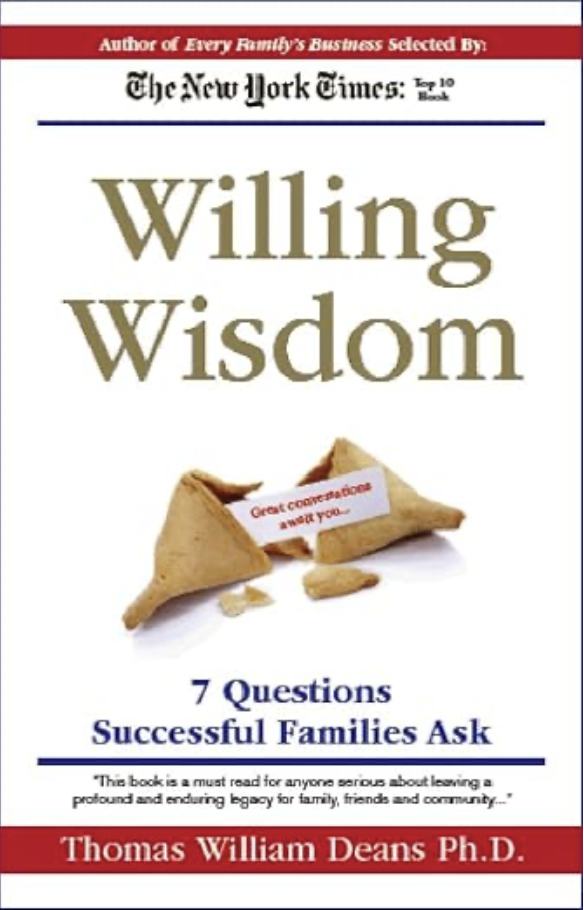
Willing Wisdom
The essence of Willing Wisdom: Seven Questions Successful Families Ask by Tom (Thomas) Deans can be summed up in one sentence:
The greatest risk to a family’s legacy is not taxes or poor investments—it’s silence.
Deans argues that most families spend enormous effort accumulating wealth, but very little time preparing their heirs to receive it. As a result, misunderstandings, conflict, litigation, and damaged relationships often follow the death or incapacity of parents.
The central message
Rather than seeing a will as simply a legal document, Deans believes it should be the beginning of a family conversation.
His philosophy is that:
Estate planning is fundamentally about people, not money.
Adult children deserve to understand the thinking behind their parents’ plans.
Openness builds trust; secrecy breeds suspicion.
Preparing heirs emotionally is just as important as preparing assets legally.
The seven questions
The book is organized around seven questions that families should discuss together. While each question has its own nuance, they revolve around topics such as:
What are your wishes?
Who should make decisions if you cannot?
What values do you want your wealth to support?
Have you explained the reasoning behind your decisions?
Are the right people prepared for the responsibilities they’ll inherit?
What conversations still need to happen?
How can the family avoid surprises and conflict?
The goal isn’t simply to answer the questions, but to use them as a framework for meaningful family dialogue.
His biggest challenge to conventional thinking
One of Deans’ strongest arguments is that keeping estate plans secret is usually a mistake.
Traditionally, many parents believe:
“The children will find out after we’re gone.”
“Talking about money will only cause problems.”
Deans argues almost the opposite:
When families never discuss inheritance, the survivors often invent their own explanations for decisions, leading to resentment and fractured relationships.
Transparency, thoughtfully handled, is generally healthier than secrecy.
Practical takeaway
The book encourages families to:
prepare wills and powers of attorney early,
review them regularly,
hold structured family meetings,
explain the “why” behind important decisions,
treat wealth transfer as a process rather than a one-time legal event.
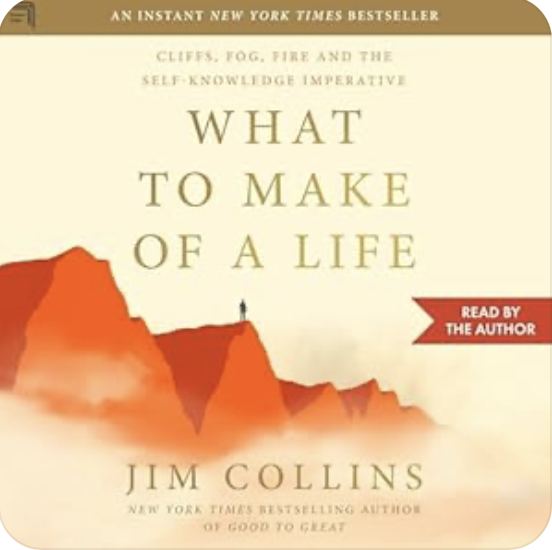
What to Make of a Life
Jim Collins, international bestselling author of Good to Great, offers transformative lessons on constructing—and reconstructing—a life through the cliff moments and transitions we all will face repeatedly in our lives.
What to make of a life?
It is a question we all wrestle with more than once: How do we find our way in the world? How do we make it past the cliffs, significant events that can radically change a life? How do we keep the inner fire burning bright, long and late? Inspired by relentless curiosity, Jim Collins devoted a decade to studying these questions and to minutely analyzing those moments when life flips from clarity to confusion and casts us into a befuddling fog.
His exploration follows various lives side-by-side, paired together at cliffs, and analyzes the different choices made and divergent paths taken. Two rock musicians confronting a future without the group that had brought them success. Two public figures tainted by scandal having to make decisions about how to rebuild their lives. Two suffragists achieving their epic goal and so left with the puzzle of what to do next. Two figure skaters seeking new purpose when their Olympic careers come to an end. What emerges from Collins’s extensive studies—of writers, actors, scientists, leaders and many others—is a framework for understanding how individual lives can be built, sustained and constantly renewed.
By examining the long arc of these remarkable lives, Collins tackles life’s questions. What does it take to:
Discover a deeply fulfilling role in life—one that you are naturally ‘encoded’ for—and then to find a second one, if the first one ends?
Overcome a major cliff—a fracture point that forces choices about what’s next and calls for you to re-envision the years to come?
Make your personal economics work so that you can focus on one big thing that feeds your inner fire?
Navigate the fog, when you feel uncertain or even outright lost, and build confidence step by step?
Build personal momentum decade upon decade, so that your most creative and energetic years are spread across an entire lifetime?
Achieve the imperative to “Know Thyself” and apply self-knowledge to each phase of life?
And for the first time, Collins movingly chronicles his own story to reveal how undertaking this project transformed him, changing his thinking and reshaping his emotions in fundamental ways. Surprising, story-driven, deeply researched, and uplifting, What to Make of a Life is a book like no other, convincingly showing how a richly fulfilled life is within reach of us all.
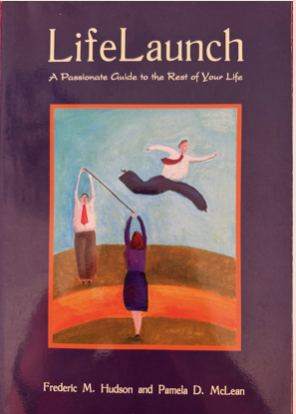
LifeLaunch
FREDERIC HUDSON & PAMELA MCLEAN
A foundational guide to navigating life's transitions with intention. Hudson and McLean argue that adulthood is not a destination but a series of chapters, each requiring renewal and deliberate design. Essential reading for anyone who senses their current chapter is coming to a close and wants to shape what comes next.
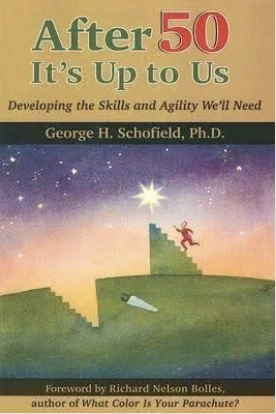
After 50 It's Up to Us
GEORGE H. SCHOFIELD, PH.D.
Schofield makes a compelling case that the second half of life demands new skills — not just wisdom, but agility. The book challenges the assumption that experience alone is enough, and offers a practical framework for staying relevant, adaptable, and engaged well into later life.
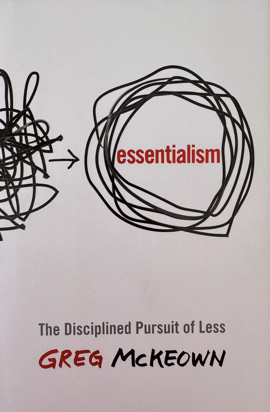
Essentialism
GREG MCKEOWN
The disciplined pursuit of less. McKeown argues that the ability to say no — to protect your time, energy, and focus for what truly matters — is the most important skill of our era. For executives entering a new chapter, this book is a powerful lens for deciding what deserves a place in the next act.
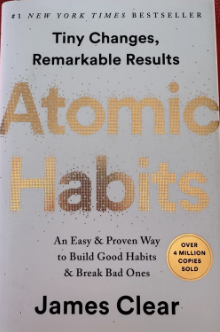
Atomic Habits
JAMES CLEAR
Small changes, remarkable results. Clear's system for building good habits and breaking bad ones is grounded in behavioral science and immediately practical. Particularly valuable at life transitions, when the routines that once structured your days no longer apply and new ones need to be deliberately built.
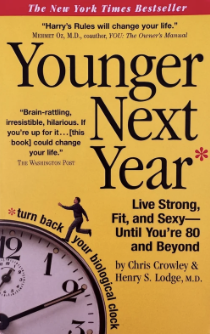
Younger Next Year
CHRIS CROWLEY & HENRY S. LODGE, M.D.
A doctor and his patient make the case that 70% of aging as we know it is optional. Blunt, energizing, and science-backed, this book reframes physical decline as a choice rather than an inevitability. Required reading for anyone who wants the energy to actually live their Third Act.
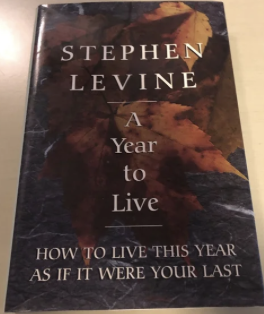
A Year to Live
STEPHEN LEVINE
What would you do differently if you had one year to live? Levine's deeply contemplative book invites readers to confront mortality not with fear, but with clarity — using it as a compass for what truly matters. A quiet, powerful book that asks the questions most people spend a lifetime avoiding.
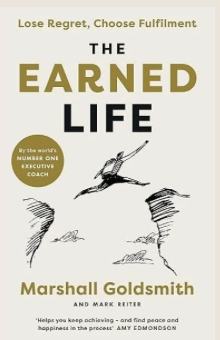
The Earned Life
MARSHALL GOLDSMITH & MARK REITER
Goldsmith — one of the world's leading executive coaches — explores what it means to live without regret. Not about achievement, but about alignment: living and giving your all in pursuit of the things that matter most to you. A book about closing the gap between who you are and who you intended to be
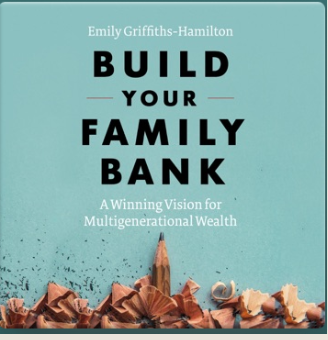
Build Your Family Bank
EMILY GRIFFITHS-HAMILTON
A thoughtful guide to building lasting family wealth — not just financial, but human. Griffiths-Hamilton offers a framework for passing on values, governance, and purpose across generations. For executives thinking about legacy, this book shifts the conversation from estate planning to something far more meaningful.
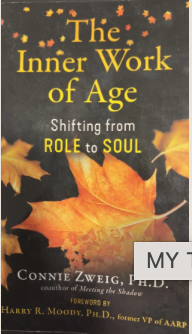
The Inner Work of Age
CONNIE ZWEIG, PH.D.
A Jungian psychologist's exploration of what it means to age from the inside out. Zweig argues that the deepest work of later life is the shift from role to soul — from what we do to who we are. A rare book that takes the inner life of aging seriously, and offers a path toward genuine wisdom and wholeness.
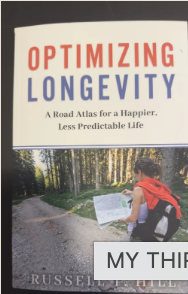
Optimizing Longevity
RUSSELL T. HILL
A practical road atlas for living longer and better. Hill combines health science with lifestyle design to map out what a longer, more vital life actually requires — and how to pursue it with intention. Useful, specific, and grounded in the reality of what the body and mind need to thrive in later decades.